Local preview for Josh's review. Nothing here is live, and the forms are not connected yet.
Eternal Timber & Design
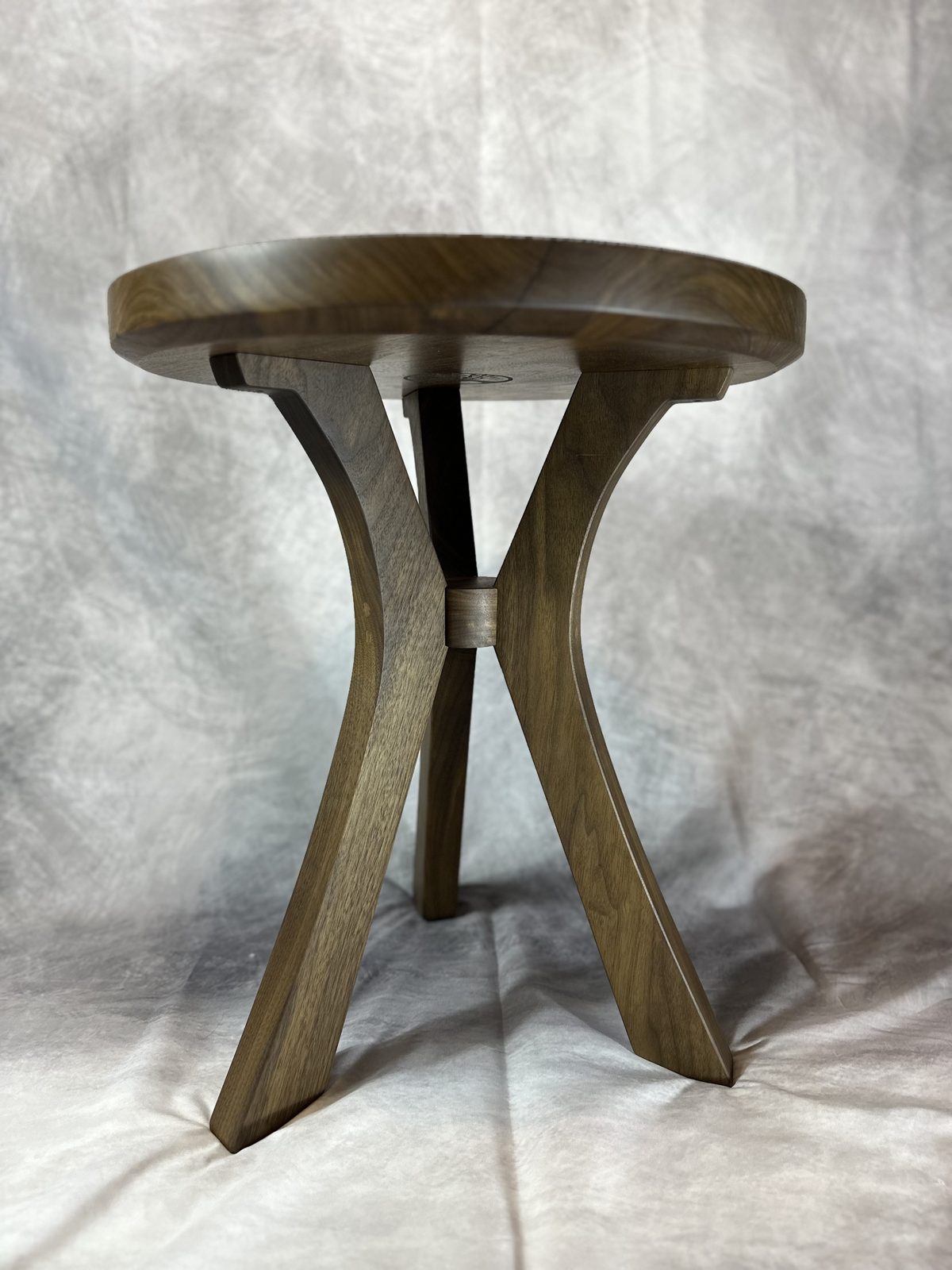
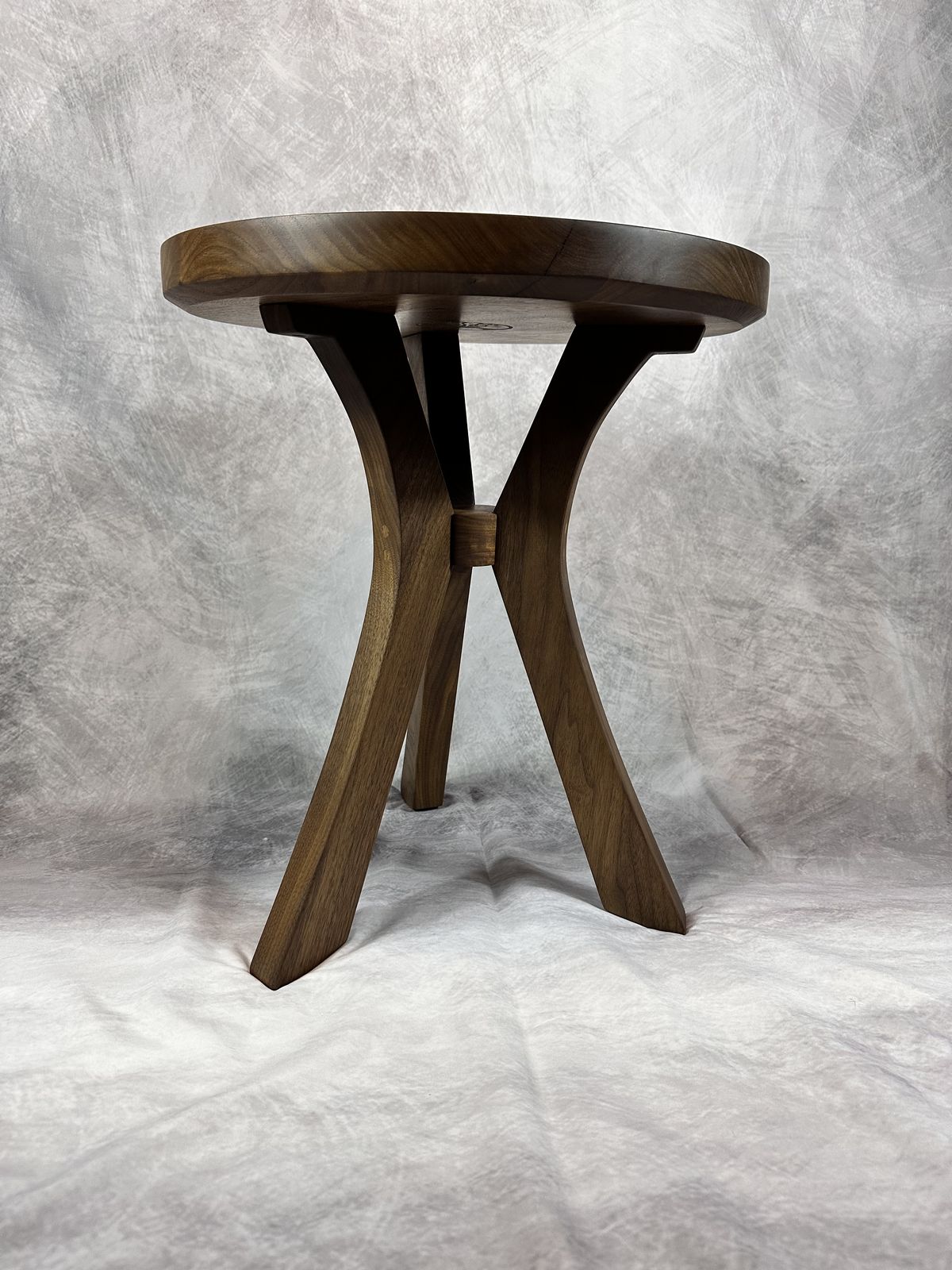
The Milo table, finished

Timeless Luxury, Designed for Life

I build furniture and decor for homes that actually get lived in, and I'll tell you what the wood is going to do before it surprises you.

I build every piece myself, in my shop in western PA, from boards I picked out by hand, and every one of them has a story behind it. Solid wood keeps changing after it leaves the shop. Walnut lightens in the sun and cherry darkens, so a table next to a bright window will look different in a year than the same table in a dim corner. Before you buy, I'll tell you how your piece is going to age in the room you're putting it in.

The Milo walnut end table
Signature piece

The Milo

The furniture makers who came before me, guys like Nakashima, Maloof, Wegner, and Milo Baughman, inspire me to make furniture that looks nice, and to be clear, they wouldn't even trust me to build their lunchbox. I called this one the Milo because it doesn't look anything like the stuff Baughman made, and mostly because I just like the name. A lot of his tables sit on flat-bar chrome with figured wood on top, which looks like pure luxury when he does it, but chrome legs under a wood top take me right back to sitting at a school desk (my baggage, not his), so this one is solid walnut on three curved, interlocking legs.

What the wood is going to doWalnut doesn't get richer with age, it lightens. I pulled two pieces I milled from the same log, one had been sitting on my kitchen counter for three years and the other was buried in a dark corner of the shop, and side by side they looked like two different species. So if your client wants that rich chocolate color in a room full of sun, have that conversation up front, because it's more of a ten year rental than a permanent feature.
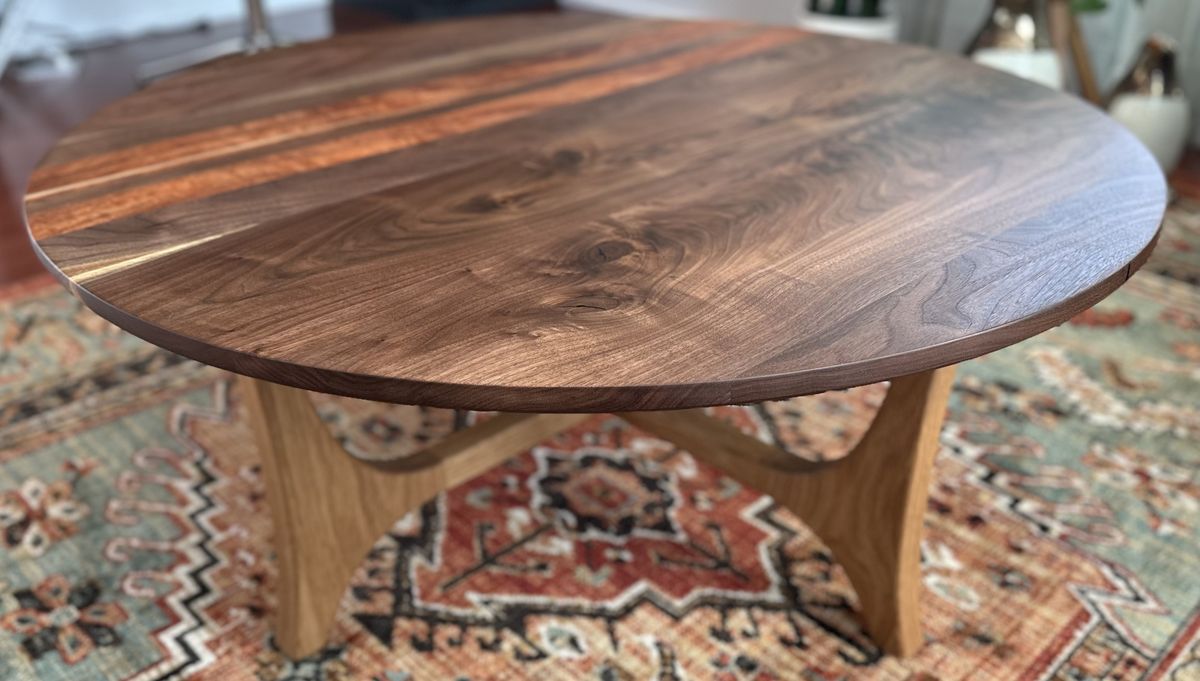
Walnut and sapele coffee table on a white oak base
Signature piece

Walnut and Sapele Coffee Table

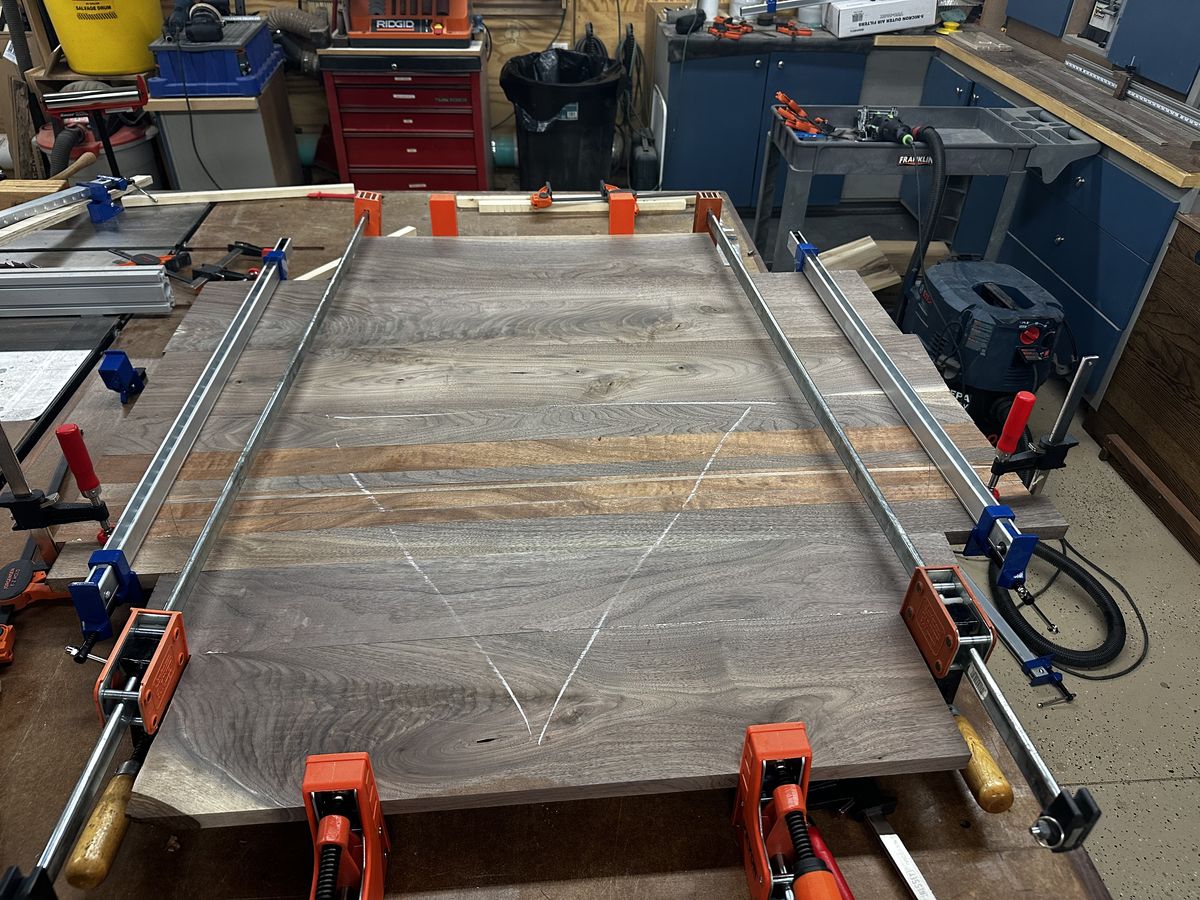
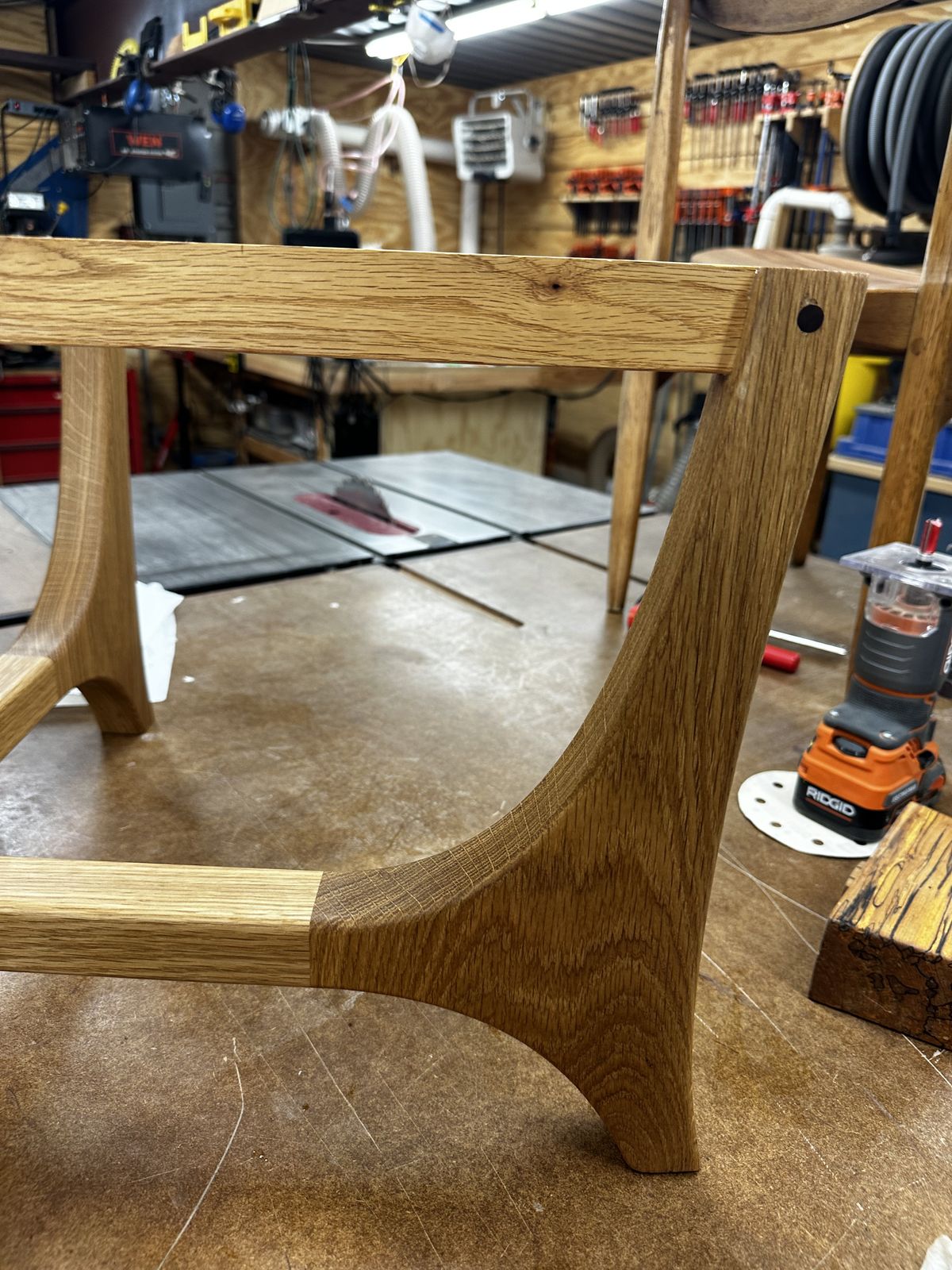
My wife wants everything in the house to match, and I like crazy grain patterns doing different things, which is pretty much how this table happened. The walnut on top has about every figure walnut can throw at you, and somehow it all went together with the sapele. It sits on an 18 inch white oak base with sculpted legs and an X stretcher, joined with the Domino.

What the wood is going to doWalnut on top and white oak underneath is a species decision, not a finish decision, and nobody talks about it enough. White oak runs about a third harder than walnut on the Janka scale and walnut will dent if you look at it wrong, so the legs that get kicked by kids and chewed on by the dog get the tough wood and the top gets the pretty one.
The top in clamps
The top in clamps
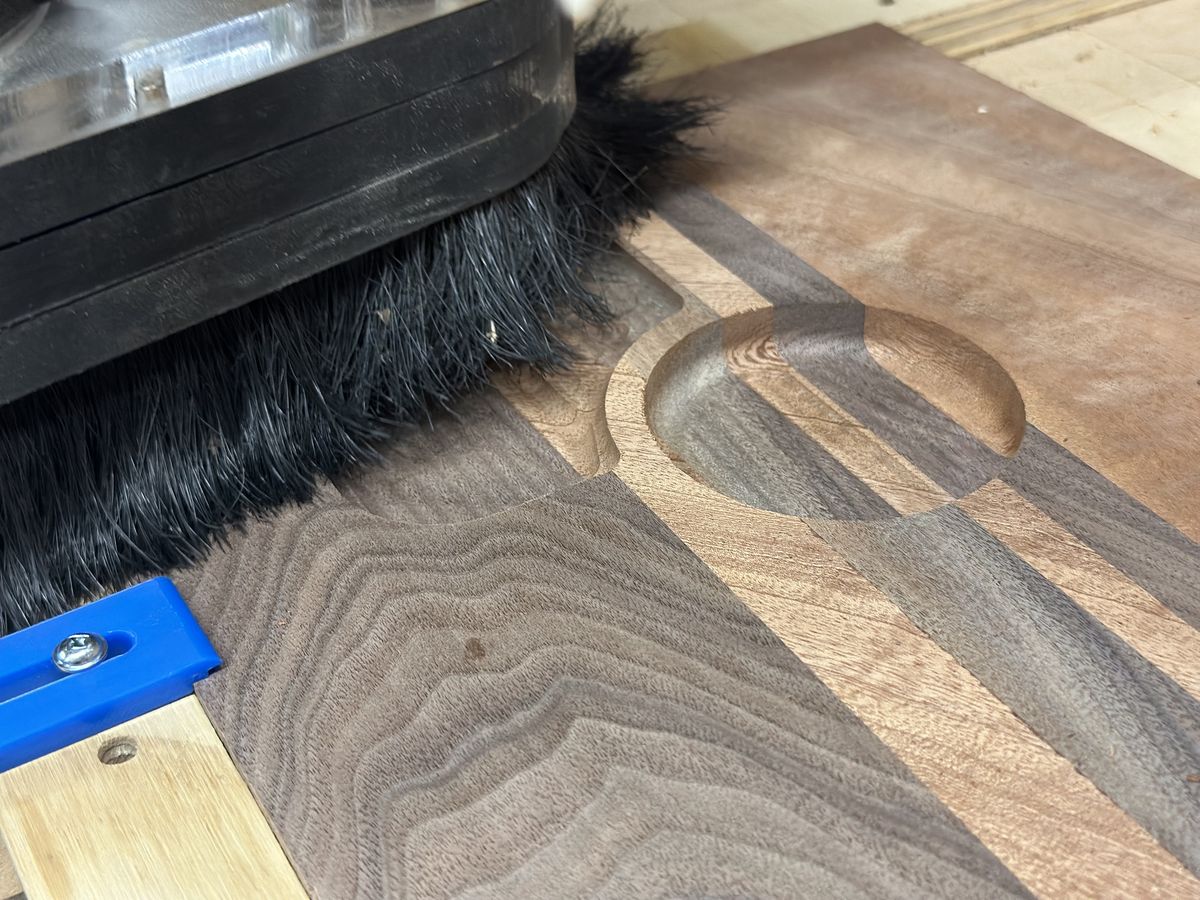
The CNC cutting the top round
Done, sculpted legs and an X stretcher
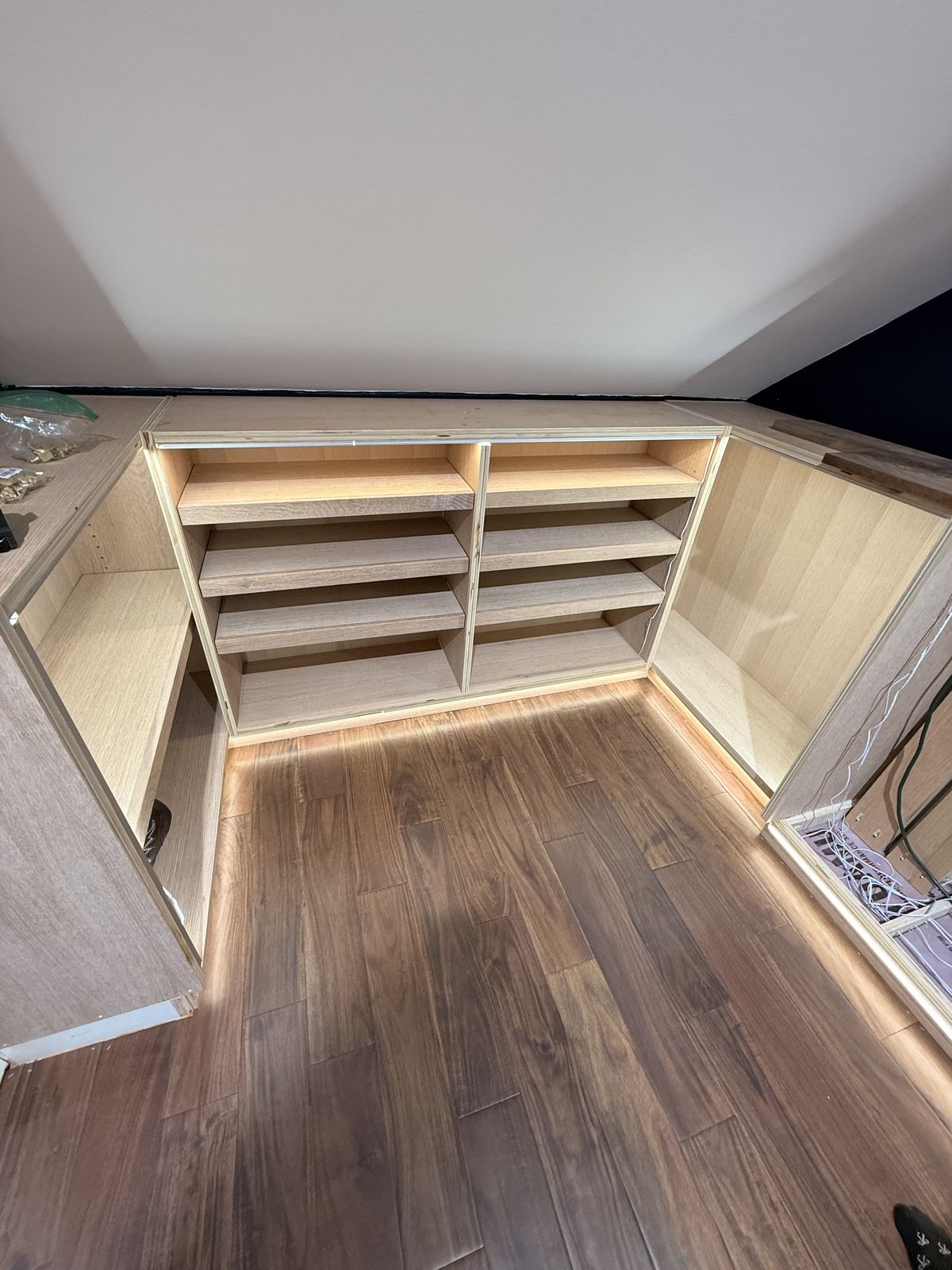
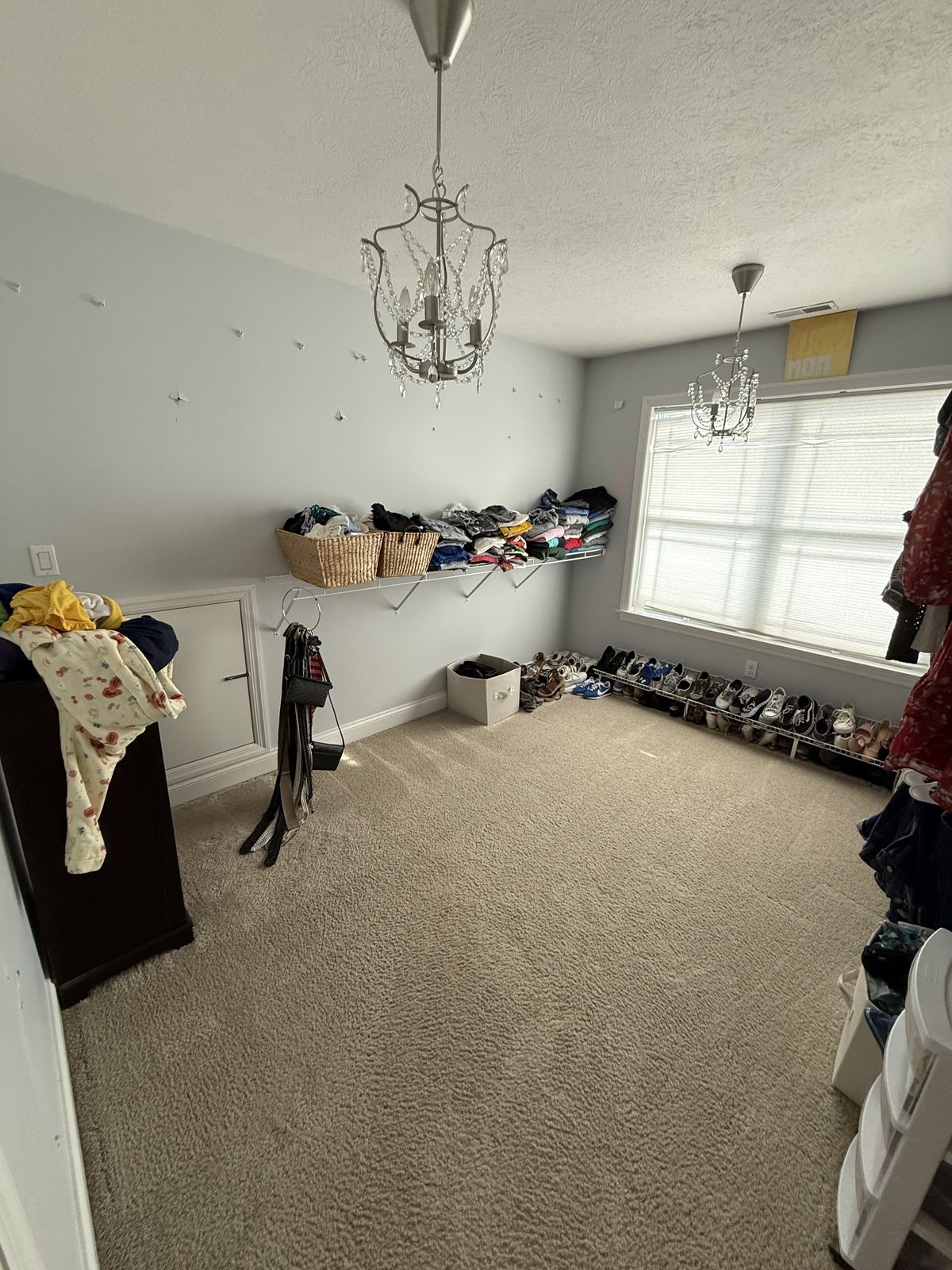
The finished white oak walk in closet
In progress

Denise's Closet

My wife's closet started out as a room full of carpet and wire shelving, and it's turning into 250 square feet of rift sawn white oak. So far that's 30 sheets of architectural grade plywood at $800 to $1,000 a sheet, broken down on the track saw in the garage, with my wife pulling panels with me every time I was too gassed to wrestle another 90 pound sheet onto the stack.

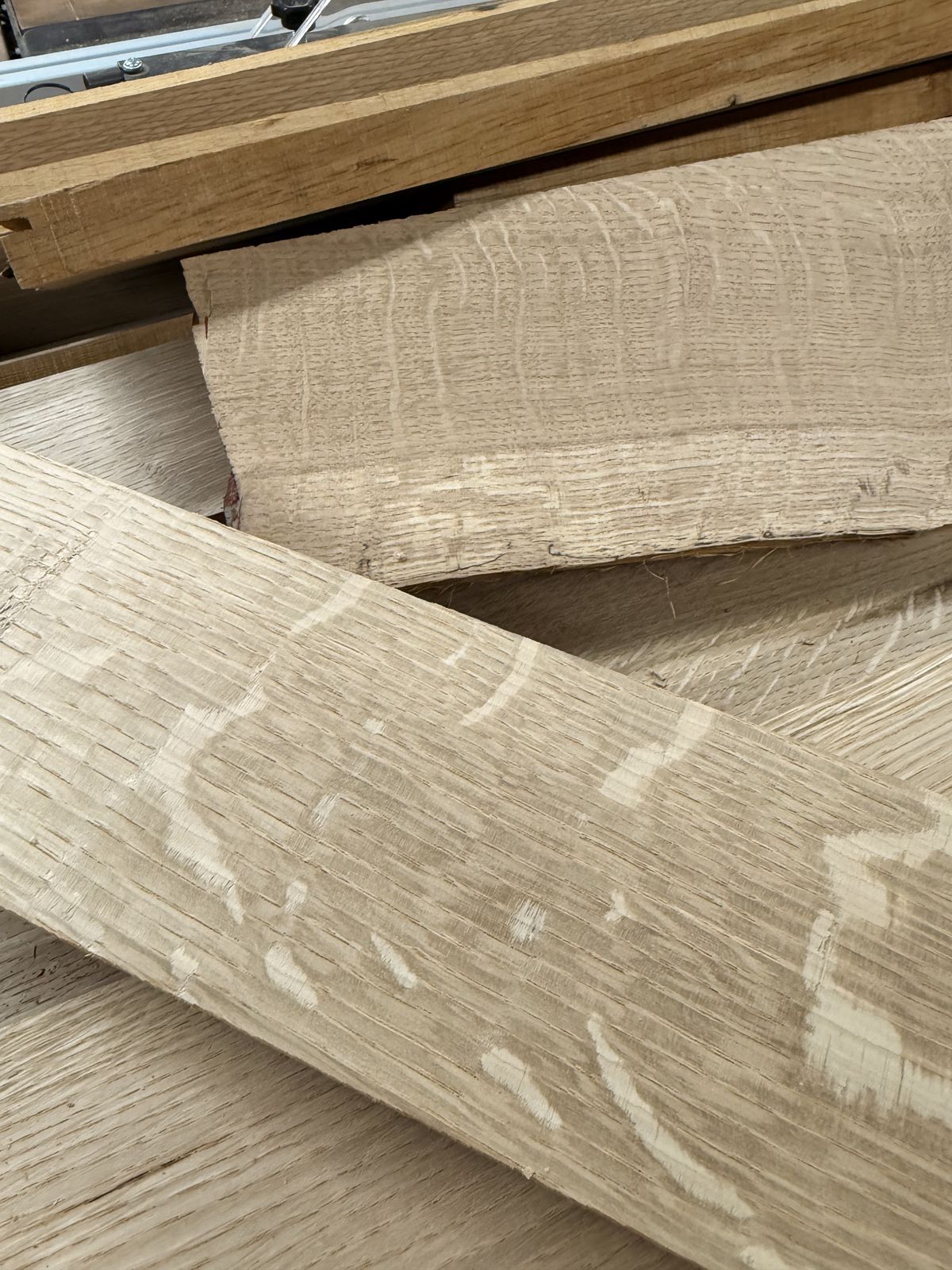
What the wood is going to doRubio White 5% on rift sawn white oak is what's making this thing look like a boutique hotel, and the reason it works is the tannins. White oak is loaded with tannic acid that will turn a water based finish gray or blotchy, so I stick with oil and hardwax on it, and the oil works with the tannins instead of fighting them.
Before, carpet and wire shelving
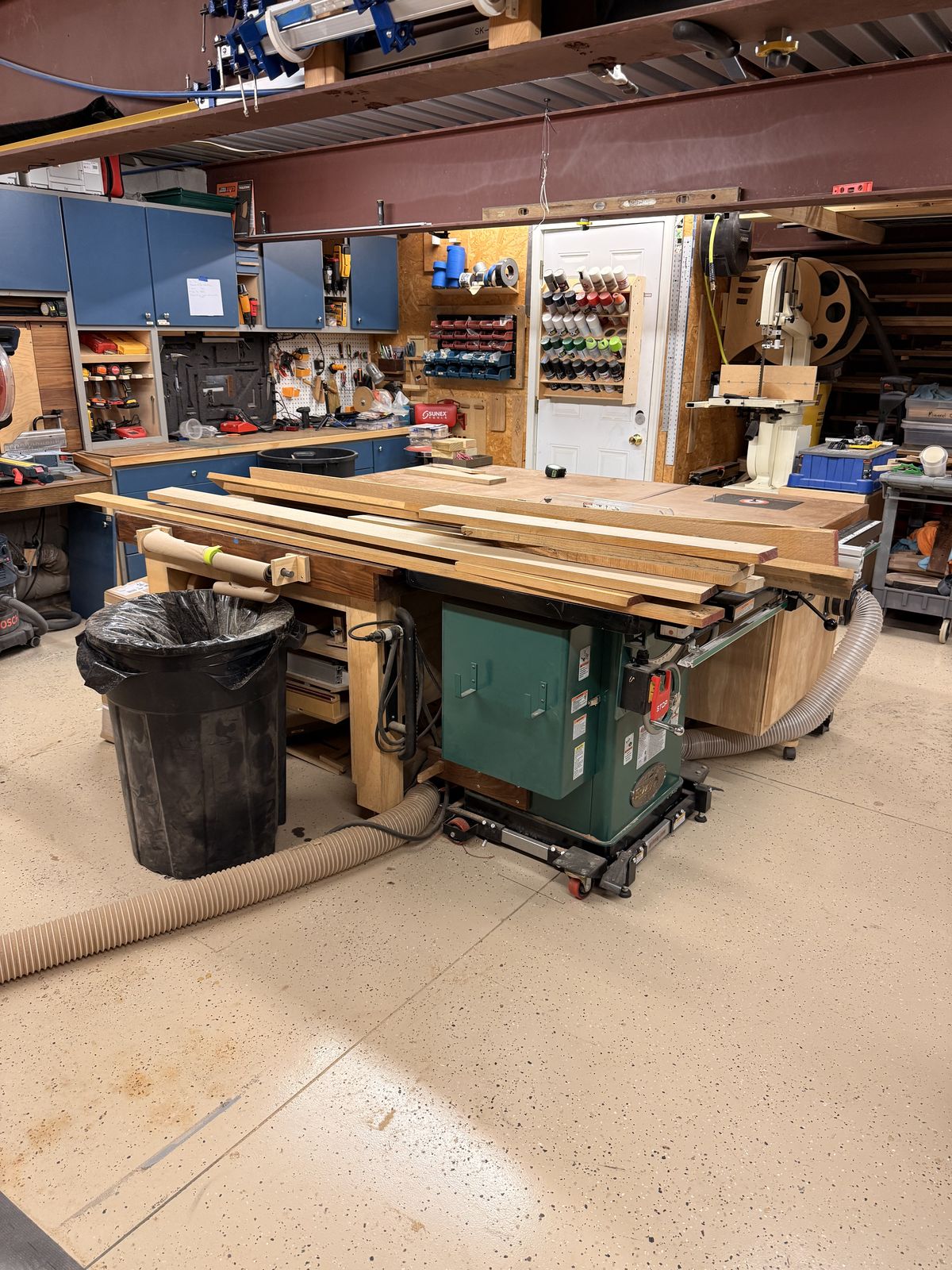
Breaking down sheets with the track saw sitting on the Grizzly
Quarter sawn white oak for the trim, ray fleck and all
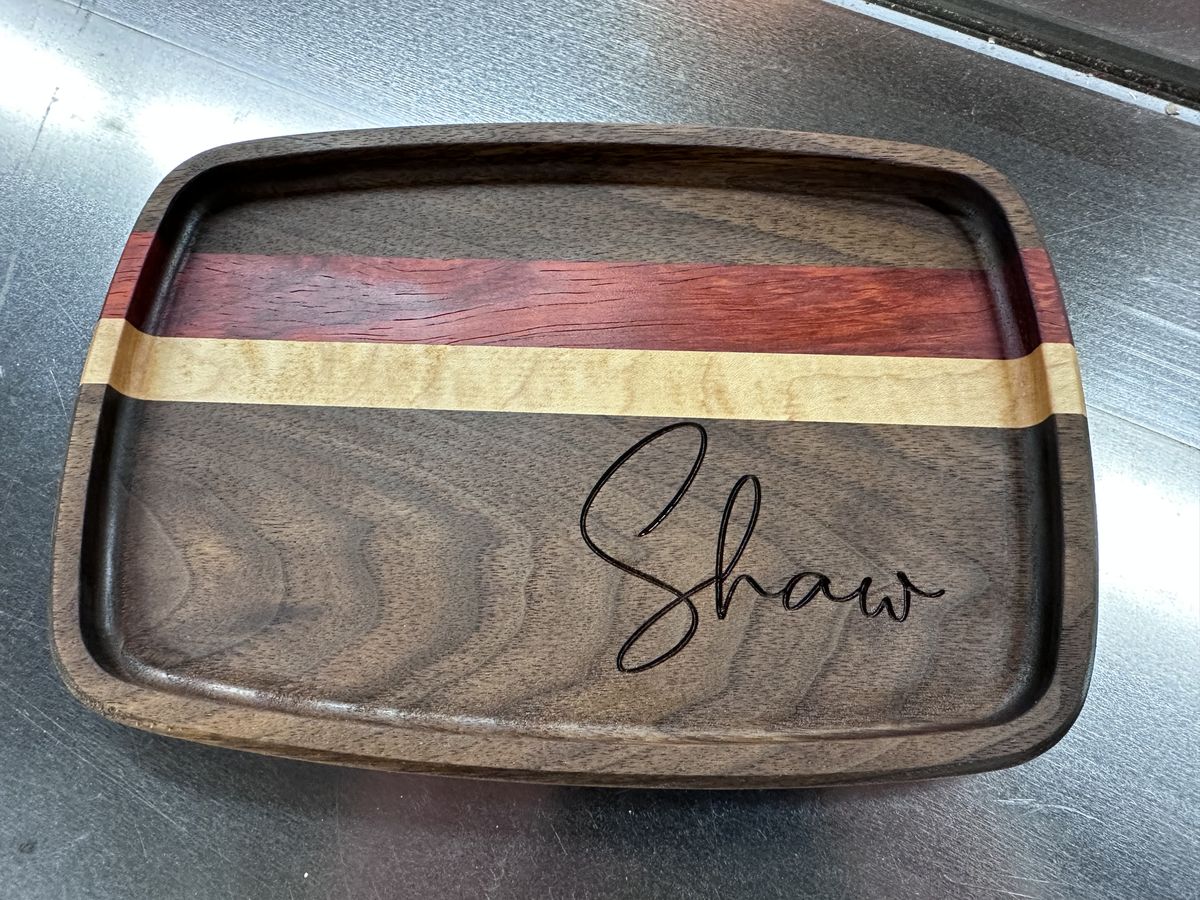
The Luxe Valet in walnut, padauk, and figured maple
Atomic Deco

The Luxe Valet

Atomic Deco is mid-century modern lines with some Art Deco geometry mixed in, and the Luxe Valet is the tray on your dresser that holds the watch, the cologne, the money clip, and whatever else comes out of your pockets at night (mine is usually a pencil, I lose a lot of pencils).

What the wood is going to doWalnut is the calm one in this piece. It's dark and quiet enough that your eye goes straight to the orange red of the padauk and the figured maple, which shifts in the light every time you walk past it, and that's the whole reason it sits in the middle. Osmo Polyx-Oil goes on these because on walnut it brings out more warmth than Rubio does.
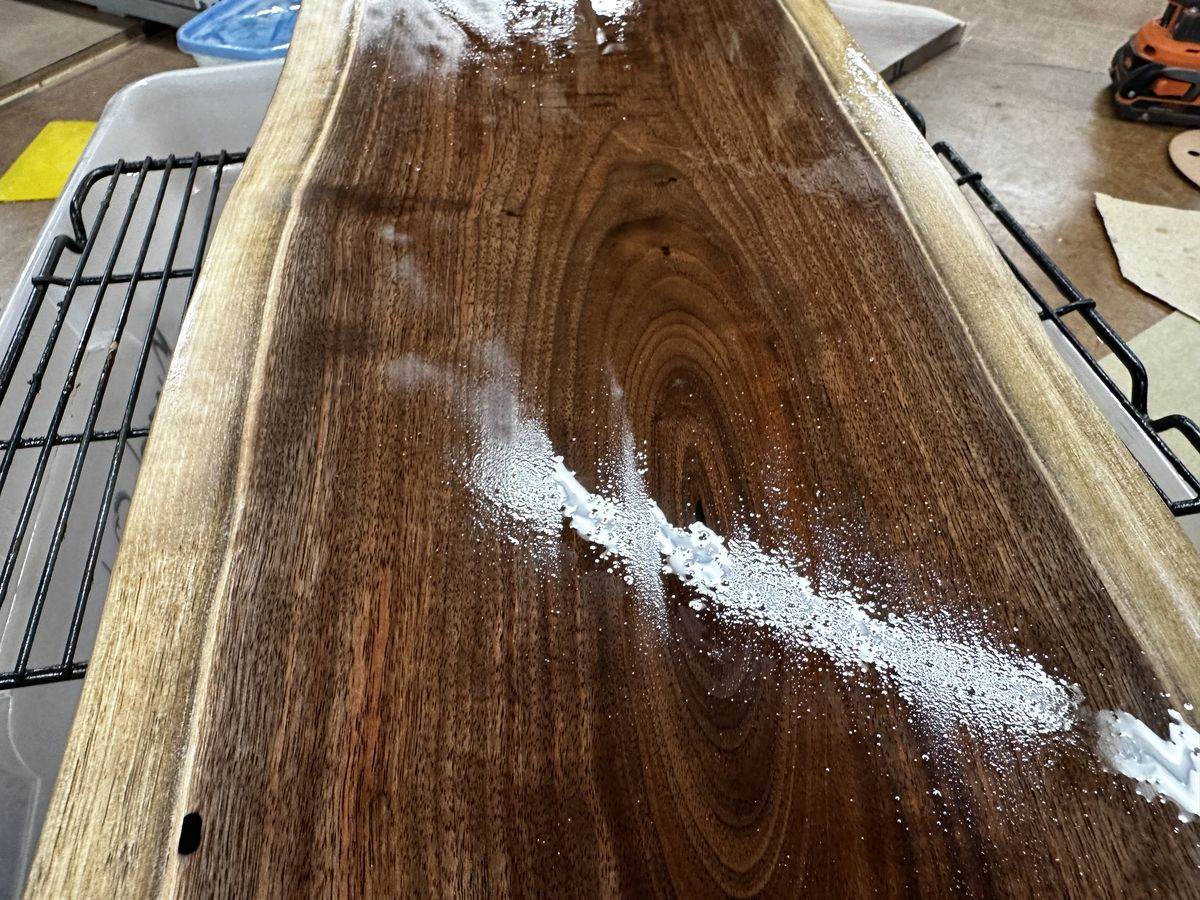
Live edge walnut the moment the first coat of oil goes on
The oil moment

Fresh off the planer, walnut isn't much to look at, it's kind of a muddy gray brown with dust in the pores and my pencil marks all over it. Then the first coat of oil goes on and it looks like a different board, deep chocolate and purple streaks with gold you didn't know was in there.

None of that comes from the oil, it was in there the whole time.

For designers

Telling me you want walnut is like telling a car dealer you want a car.

Steamed or air dried, sapwood or all heartwood, American or European, plain flat sawn or something figured, those are the questions that decide what actually shows up at the job, and I'd rather ask them before the lumber gets ordered than after.

  1. Walnut lightens in the sun, so plan for the ten year light shift before it goes in front of a big window.
  2. Walnut dents, and a walnut dining table is going to show life in a way a maple or white oak table won't, so have that conversation with your client up front.
  3. Rubio White 5% looks incredible on quarter sawn white oak and goes chalky and cold on walnut, so ask for a sample board first.
  4. Most commercial walnut is steamed, which pulls the sapwood closer to the heartwood color, and air dried walnut keeps that cream and chocolate contrast but runs two to three times the price.
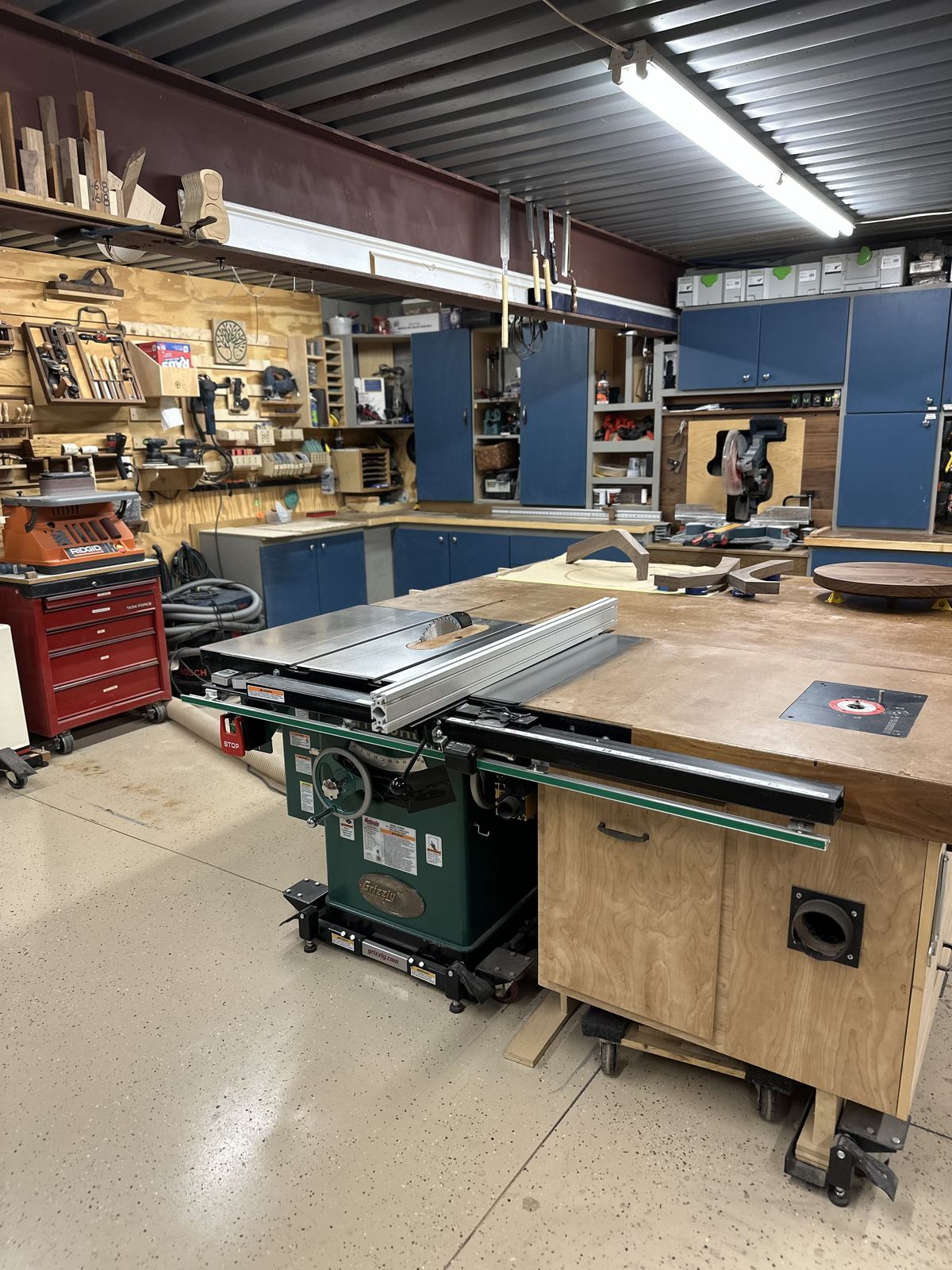
My shop in western PA
The shop

Step inside the shop

It's about 800 to 900 square feet and every inch of it is taken, so watch where you step.

Take the tour